Newsletter
Suscríbete a nuestro Newsletter y entérate de las últimas novedades.
https://centrocompetencia.com/wp-content/themes/Ceco



This text was originally published by Cuatrecasas on May 1st
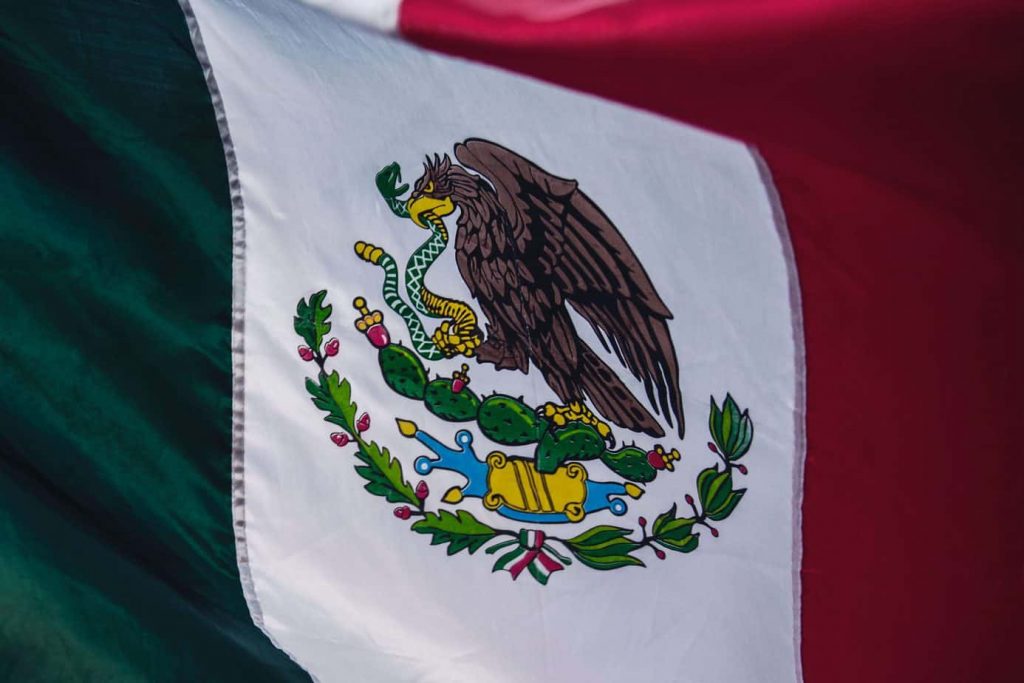
Mexico’s new antitrust authority, the National Antitrust Commission (CNA), began operations on October 17, 2025, replacing the former autonomous regime with an authority now folded into the Ministry of Economy as part of the Executive Branch. Since this institutional redesign, one of the central questions has been whether the CNA’s decision-making will retain its technical character or become vulnerable to political influence. So far, CNA rulings have remained technical; however, President Sheinbaum has publicly expressed opinions about the benefits of certain transactions while merger reviews are ongoing. Whether this type of signaling will influence the CNA’s decision-making remains yet unclear.
Merger filings in Mexico have steadily increased in recent years, from 153 in 2023 to 164 in 2024 and 182 in 2025. At the same time, monetary thresholds were reduced by approximately 13%. The combination of lower thresholds and sustained M&A activity is likely to push filing volume even higher. If the current pace continues (with over 85 filings by the end of April), 2026 will close with a record total of more than 200, putting pressure on the CNA’s operational capacity.
Mexico’s lengthy review periods have long posed challenges. The statutory review period was cut from 100 to 50 business days – 30 days with an additional 20 for complex cases. In practice, however, this does not necessarily mean faster outcomes. The CNA retains significant discretion at the pre-admission stage, and by extending the time to formally admit a filing, it can effectively offset this acceleration. Data through April 2026 shows an average of 32.1 business days to admit a filing and 32 business days to issue a decision once admitted, both exceeding the 2025 averages of 29 and 18 business days, respectively.
The CNA is applying more rigorous scrutiny to deals, with a focus on structural aspects. Parties should expect requests for market share data even where horizontal overlaps appear minimal, as well as for relevant transaction documents. On the positive side, the agency has expressed openness to early engagement and has signaled interest in hearing from experts on market dynamics. Managing lower thresholds, deeper scrutiny, and tighter formal timelines is challenging, but staffing has expanded, with the merger review team growing from 35 to 45 officials over the past year.
Effective December 19, 2025, Mexico replaced its flat merger filing fee to a bracket-based system tied to transaction value.[1] The lowest fee – USD $46,429 – is now 3.5 times higher than the previous rate of USD $13,043, while the highest – USD $316,584 – is 24 times higher. As filing fees are the CNA’s primary funding source, projected 2026 volumes combined with higher fee levels may push revenues beyond budget expectations, making future recalibration likely.
The CNA has justified its bracket-fee system by citing similar mechanisms elsewhere. However, in benchmark jurisdictions like the U.S., filing fees are based on the actual transaction value as the agreed consideration. Mexico, by contrast, uses the «Maximum Estimated Value» (VME), defined as the highest among (1) the transaction price, (2) the target’s assets, or (3) the capital stock of entities being acquired. Where a target’s assets or capital stock far exceed the purchase price, this approach can see fees inflated beyond the deal’s real economic dimension.
As uncertainty remains around VME calculations, the CNA has indicated flexibility, allowing additional payment upon rectification if initial calculations were made in good faith. However, merger notices must explain the methodology of the VME calculation, adding an additional element to the merger review process. Inconsistencies may trigger clarification requests, and in cases of falsification, sanctions.
The most recent enforcement cases across multiple sectors illustrate this trend. In the healthcare sector, the authority sanctioned exclusivity conditions in medical oxygen supply agreements, assessing their foreclosure effects on access to key end customers and healthcare providers.[2] In the corn flour market for tortillas, the authority — while examining the structure and functioning of the market as a whole — ultimately identified de facto exclusivity arrangements as a key mechanism through which competition could have been affected.[3] Similarly, in the market for mobile operating systems, the authority examined contractual conditions imposed on device manufacturers as barriers that limit rivals’ access to end users and entrench market power.[4]
The first wave of digital antitrust cases originated in the EU, addressing abuse-of-dominance theories such as leveraging, foreclosure, and exclusivity arrangements. Mexico followed by opening investigations into e-commerce,[5] app stores,[6] and search engine markets.[7] Of these, the app stores case remains pending; while the e-commerce and search engine investigations were closed without material findings.
Internationally, a new enforcement wave around algorithmic pricing, collusion through information sharing, and AI-related dominance issues is taking shape. Mexican law has long treated such information sharing as a competition risk, and a recent amendment strengthens this approach. Previously, information exchanges were characterized as conduct that could «facilitate» a cartel, requiring proof of an underlying agreement. The amended law now expressly identifies an exchange of information as a per se violation modality when used to fix prices, limit output, allocate markets, or rig bids. As a result, a collusive exchange of information is itself prohibited, narrowing defenses premised on the absence of a formal agreement. The CNA has indicated this modification will be particularly useful for algorithmic pricing and information-sharing cases.
Although individual «follow-on» damages actions have existed in Mexico since 1992, and class actions since 2010, both mechanisms had limited practical impact until recently. Legislative reforms and a Supreme Court ruling now allow claimants to bring damages actions once the competition authority issues its administrative decision, without waiting for judicial appeals to conclude.
In early 2025, the CNA filed Mexico’s first antitrust class action, seeking approximately USD $122 million following a 2021 finding of pharmaceutical collusion.[8] On April 23rd, 2026, the CNA announced a second class action filing against major liquid gas petroleum companies, after its 2022 finding of price collusion and market segmentation.[9] The authority is seeking compensation for damages amounting to approximately USD $772.8 million.
A recent reform to the statute has sought to shield leniency applicants from class actions brought by the authority (though not from private claims), preserving cooperation incentives. Additional procedural changes will follow in the National Civil Code effective April 2027, extending the statute of limitations from 3.5 to 5 years. Despite all this, key uncertainties nevertheless remain: court jurisdiction is still being tested, inconsistencies persist regarding limitation periods, and no clear standards govern causation or damages quantification. Whether Mexico ultimately consolidates a credible private enforcement regime will depend on how courts resolve these gaps. In the meantime, the CNA is pushing forward.
Beyond individual cases, the CNA’s public messaging increasingly appears to echo the administration’s broader policy objectives. In presenting the 2026-2030 Institutional Program, the CNA’s Chair emphasized that the authority’s action must be guided both by technical rigor and «social commitment».
Similarly, in a recent resolution accepting behavioral commitments in the corn flour market for tortillas, the agency determined that accepting the proposed remedies would generate «redistributive effects» benefiting small and medium enterprises and consumers — language closely aligned with the administration’s social policy priorities.[10] It remains unclear whether this shift in the authority’s discourse will ultimately permeate the CNA’s substantive enforcement agenda, its case analysis and its resolutions, but it is worth taking note of.
Recent CNA academic events and public statements suggest that labor-market theories of harm may become more prominent in future enforcement, particularly as the authority continues to frame competition policy in terms aligned with broader social and distributional objectives.[11] Issues include traditional scrutiny of no-poach, as well as a growing focus on monopsony power and other frictions that constrain labor mobility. That being said, non-compete and non-solicitation arrangements, where relevant, are expected to be assessed under the criteria historically applied in Mexico, including limits on duration (up to three years) and geographic scope (tied to the territories where the relevant economic agents operate). Nevertheless, parties should anticipate, where applicable, assessments of a transaction’s potential effects on labor-market conditions.
Taken together, the CNA’s first six months suggest an authority still finding its institutional footing, more closely aligned to the government’s own agenda but also signaling its technical approach to resolving matters. It’s a delicate balancing act. How the authority ultimately handles mergers and enforcement actions in the months ahead will do much to shape outside perceptions of its independence and effectiveness.
[1] https://www.dof.gob.mx/nota_detalle.php?codigo-5776718&fecha-19/12/2025
[2] https://www.gob.mx/antimonopolio/prensa/cna-sanciona-a-empresas-por-establecer-exclusividades-en-la-venta-de-oxigeno-medicinal-a-instalaciones-medicas
[3] https://www.gob.mx/antimonopolio/prensa/comision-nacional-antimonopolio-establece-medidas-para-reactivar-la-competencia-en-el-mercado-de-harina-de-maiz-y-beneficiar-a-propietarios-de-tortillerias
[4] https://www.gob.mx/antimonopolio/prensa/la-comision-nacional-antimonopolio-impulsa-un-mercado-de-dispositivos-moviles-mas-abierto-y-competitivo-para-las-y-los-mexicanos
[5] https://www.cofece.mx/cofece-concluye-investigacion-en-comercio-electronico-minorista/
[6] https://www.cofece.mx/cofece-investiga-posibles-practicas-monopolicas-relativas-en-mercado-de-pagos-de-aplicaciones-moviles-y-contenido-digital/
[7] https://www.cofece.mx/cofece-concluye-procedimiento-en-el-mercado-de-publicidad/
[8] https://www.cofece.mx/cofece-interpone-la-primera-demanda-de-accion-colectiva-en-su-historia-por-manipulacion-en-abasto-y-precios-de-medicamentos/
[9] https://www.gob.mx/antimonopolio/prensa/comision-nacional-antimonopolio-presenta-demanda-colectiva-para-que-empresas-reparen-el-dano-causado-a-consumidores-de-gas-lp
[10] https://www.gob.mx/antimonopolio/prensa/comision-nacional-antimonopolio-establece-medidas-para-reactivar-la-competencia-en-el-mercado-de-harina-de-maiz-y-beneficiar-a-propietarios-de-tortillerias
[11] https://globalcompetitionreview.com/article/new-mexican-enforcer-applying-closer-scrutiny-labour-issues-in-deal-probes
Regístrate de forma gratuita para seguir leyendo este contenido
Contenido exclusivo para los usuarios registrados de CeCo